

The Real vs. Imaginary Problems Writers Face
Choosing between writing and survival is a myth we need to stop believing


Hey there, it’s John here. Today, I’d like to talk about a response I got from a reader from a recent story. This reader/writer asked me about balancing writing and personal responsibilities:
"When you have a goal and responsibilities, a dream and a job that clash, which one do you choose?" she wrote. "Because splitting your focus between them isn't easy even if you know which one you'd like to pursue."
I get where she’s coming from because I used to feel the same. I think the reason we often feel this way comes from narrative fed to us our entire lives.
The popular myth of writing
Hollywood loves the dramatic career change. Think of all those movies where the main character quits their job to open a bakery or write their magnum opus. We see this narrative amplified in the news too. Everyone seems eager to cover stories about people who "followed their dreams" and left traditional careers for creative pursuits.
These stories are inspiring. They’re also in movies and the news for a reason: they’re rare.
Narratives like these perpetuate the myth: Real artists sacrifice everything for their craft. If you're not willing to live on ramen and risk everything, you're not serious about writing. You have to choose. Dreams or security. Passion or practicality.
The cultural narrative of the "starving artist" has convinced us that struggle equals authenticity. That if we're not suffering, we're not real writers.
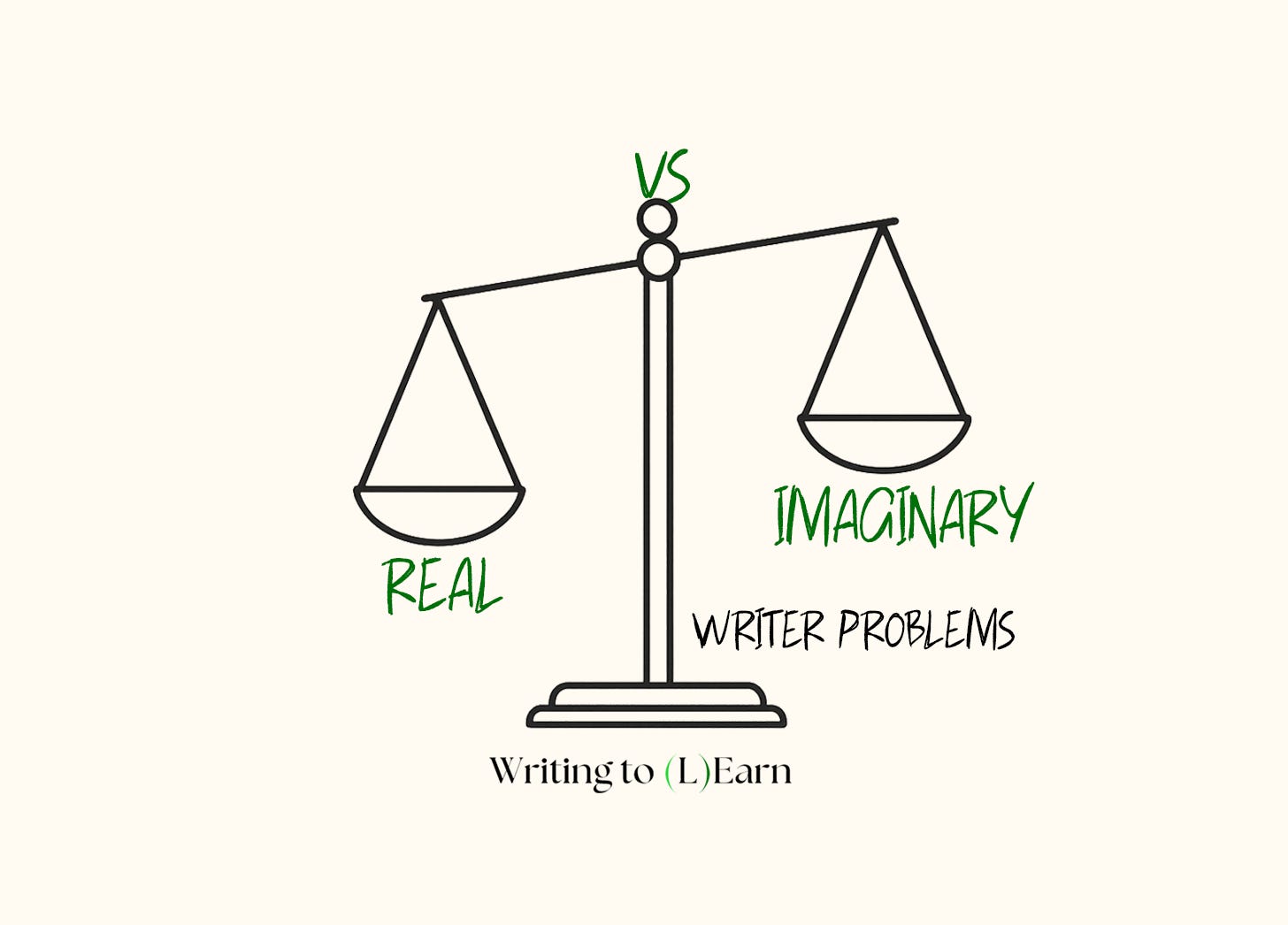
Real problems vs. imaginary problems
Before we make any major life decisions, we need to separate what's actually stopping us from what we think is stopping s.
Imaginary problems:
Needing to quit everything dramatically to "prove" you're serious
Believing you need perfect conditions to start writing
Assuming all successful writers made brave, risky leaps
Feeling like you're not a "real" writer unless you [insert rare-to-achieve goal here]
Actual problems:
Learning to write well enough that people will pay you for it
Building an audience that cares to read your work
Managing time between writing and your current responsibilities
Developing multiple income streams so you're not dependent on one
Figuring out the business side of writing (promotion, pricing, client contracts, etc. )
The imaginary problems come from movies, social media success stories, and our romantic notions about artistry. They make us feel guilty for wanting both creativity and stability, as if these things are opposites instead of complementary.
I’ve seen a number of writers spend months agonizing over whether they should quit their job (imaginary problem) instead of spending that time learning how to pitch clients or building their skills (real problems).
You don’t have to “choose”
The simple but hard-to-execute answer to the reader’s query is this: Start small, build gradually, and focus on executing a strategy that helps you reach your goals sustainably so you don’t quit before you “make it.”
Yes, this approach is less romantic than traveling to some exotic country to “find yourself,” having a meet-cute that ends tragically, and then writing a New York Times bestseller that gets adapted into a Netflix series starring your favorite actor. It's also more likely to result in you actually becoming a writer who earns sustainably from your words.
Your future self doesn't care whether your writing career started with a dramatic gesture or a boring Tuesday when you finally sent your pitch email, wrote that book chapter, or published that article. They just care that you started.
See you next week!
—John, with Darius and Michael